Operations
How New Jersey Restaurants Can Simplify Purchasing With One Wholesale Food Supplier
The guest sees a plate.
The restaurant owner sees everything it took to put that plate together.
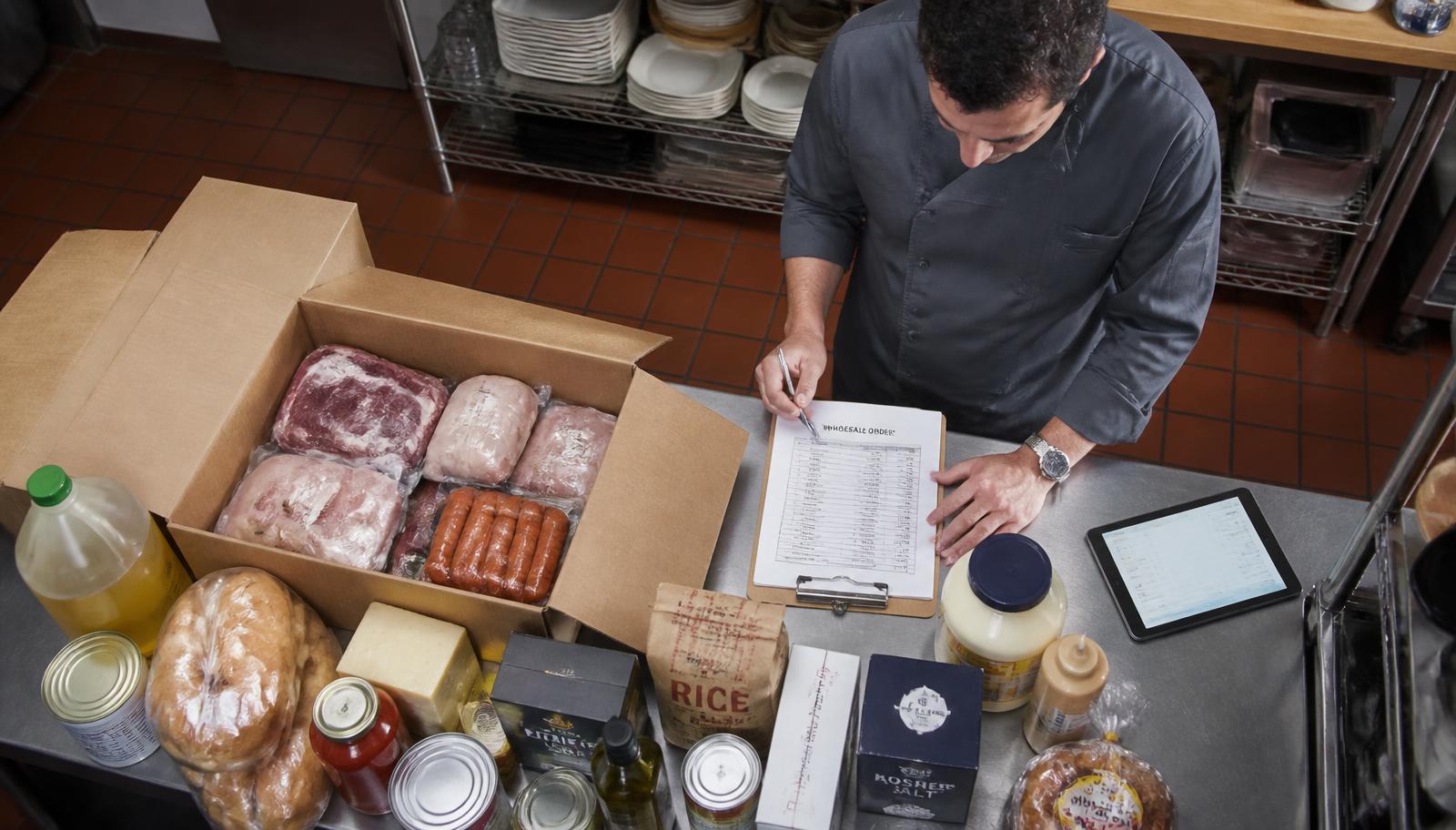
The chicken came from one supplier. The cheese came from another. Bread arrived Tuesday. Condiments arrive Thursday. Someone needs to call about the missing case of turkey. Two invoices are still sitting on the desk. The chef just added a special that requires yet another vendor.
Food purchasing can get complicated quickly.
For independent restaurants and cafés in New Jersey, reducing that complexity can free up valuable time and make the operation easier to manage.
One way to do that is by consolidating more of your purchasing with a food distributor that carries multiple product categories.
Apito Provisions serves restaurants, cafés, delis, hotels, bars, and other food service businesses throughout Northern New Jersey and the surrounding tri-state area, providing a broad range of food products through one regional supplier.
Here's why that can matter for your business.
Vendor Management Takes More Time Than You Think
Every supplier relationship creates administrative work.
You need to:
- Check inventory
- Build an order
- Meet ordering deadlines
- Confirm pricing
- Receive the delivery
- Check what arrived
- Address shortages or substitutions
- File or enter the invoice
- Pay the vendor
- Communicate about future needs
Multiply those tasks across five, eight, or ten suppliers and purchasing becomes a significant part of the week.
Larger restaurant groups may have dedicated purchasing teams.
Independent restaurant owners often don't.
The person reviewing invoices at 10 p.m. may be the same person who opened the restaurant that morning.
Reducing the number of suppliers you depend on can simplify the workload.
Consolidation Can Make Ordering More Efficient
Supplier consolidation does not necessarily mean buying absolutely everything from one company.
Specialty restaurants will always have certain unique vendors.
Instead, the goal is to identify categories that make sense to purchase together.
For example, a café may regularly need:
- Turkey
- Ham
- Chicken
- Cheese
- Bread
- Condiments
- Oils
- Pasta
- Dairy
- Specialty grocery items
If many of those products can arrive through one food service distributor, the café has fewer orders and deliveries to coordinate.
A restaurant might combine proteins, dairy, pantry products, and certain specialty ingredients through the same supplier while maintaining a separate relationship for an especially unique ingredient.
The right balance depends on your concept.
Fewer Deliveries Can Reduce Disruption
Every delivery interrupts the normal flow of your kitchen.
Someone needs to meet the driver, verify products, move inventory, organize storage, and deal with the paperwork.
During prep, that interruption matters.
During lunch service, it matters even more.
When appropriate categories are consolidated into fewer deliveries, your receiving process can become more predictable.
Your team can prepare space in the walk-in, assign someone to check the order, and get products stored quickly.
Operational simplicity may not sound exciting, but over hundreds of deliveries each year, small efficiencies add up.
Consolidated Purchasing Can Improve Inventory Visibility
Inventory problems are frequently communication problems.
A chef believes someone ordered chicken. The manager thought the chef ordered it. The café is running low on cheese, but the cheese order is separate from the meat order. A condiment used across several menu items suddenly disappears from dry storage.
The more fragmented your ordering process becomes, the easier it can be to lose visibility.
Consolidating key categories helps create a more complete view of what the kitchen is purchasing.
Instead of checking multiple vendor lists, you can review a larger portion of your needs in one ordering process.
That can make planning easier, especially for owners managing several responsibilities at once.
Product Consistency Supports Menu Consistency
Your guests expect the same dish each time they order it.
If your chicken sandwich is great on Monday but noticeably different on Friday, the customer does not care that your normal supplier was out of stock.
They simply know the meal changed.
Reliable sourcing helps protect consistency.
Using a distributor that regularly stocks the products and brands your restaurant depends on can reduce the need to scramble for replacements.
Apito Provisions carries a broad mix of food service categories, including deli products, meats and poultry, seafood, dairy and cheeses, breads and pastries, pasta and grains, oils and condiments, and specialty grocery items.
The company also carries established brands used by professional kitchens, including Thumann's, for which Apito is an authorized distributor in its regional market.
One Supplier Can Help You Build Across the Menu
Think about how interconnected most menus really are.
A single chicken breast could appear in:
- A grilled chicken sandwich
- A Caesar salad
- A pasta entrée
- A wrap
- A catering tray
The cheese used on breakfast sandwiches might also appear on burgers or lunch sandwiches.
One type of bread may support breakfast, lunch, and catering. A condiment can cross several dishes.
When a distributor carries products across multiple categories, you can evaluate ingredients as part of the whole menu rather than in isolation.
That can help operators find products with multiple applications.
And for a restaurant owner, an ingredient that works in three menu items is often more useful than one that only works in one.
Next-Day Delivery Can Support Leaner Inventory
Storage is expensive.
Many independent cafés and restaurants operate with limited walk-in, freezer, and dry-storage space. Keeping excessive inventory "just in case" can consume that space and tie up cash.
Dependable delivery schedules can help operators make purchasing decisions with greater confidence.
Apito Provisions offers refrigerated next-day delivery throughout its Northern New Jersey and tri-state service area.
For the restaurant owner, a faster ordering cycle can help when:
- Weekend volume is higher than expected
- A special sells faster than planned
- Catering orders increase demand
- Storage space is limited
- A key ingredient needs replenishment
- Menu needs change quickly
The goal isn't to run your shelves empty. It's to avoid carrying unnecessary amounts of product simply because you don't know when your next reliable delivery will arrive.
Regional Relationships Still Matter
Technology has made ordering easier, but restaurants are still a relationship business.
There will always be situations that require a conversation.
You may need to ask:
- "Do you have an alternative?"
- "What's available this week?"
- "Can I add something to my order?"
- "What would work for this menu idea?"
- "Can you help me source this product?"
Having access to people who understand your account is valuable.
Apito Provisions has been family-run since 1982 and built its business serving food operators across the region.
For independent restaurants, having a regional supplier means working with a company that is connected to the same food service market in which you operate.
Café Owners Can Benefit From Consolidation Too
Cafés have become increasingly food-focused.
A modern café may offer breakfast sandwiches, pastries, salads, paninis, wraps, lunch specials, grab-and-go meals, and catering in addition to drinks.
That expanded menu creates more purchasing complexity.
A café that once needed mainly dairy products and baked goods may now be ordering meats, cheeses, breads, condiments, proteins, and pantry items.
Working with a broad food service supplier can support that growth without forcing the owner to add a new vendor every time the menu evolves.
Consider the Total Cost of Purchasing
Restaurant owners naturally compare case prices. They should.
But the lowest invoice price does not always equal the lowest operating cost.
Consider the hidden costs of a fragmented supply chain:
- Employee time placing multiple orders
- Receiving multiple deliveries
- Invoice processing
- Delivery errors
- Emergency purchasing
- Inconsistent substitutions
- Extra administrative work
A slightly different unit price may be worthwhile if the overall supplier relationship makes the operation substantially more efficient.
That does not mean you should stop comparing prices. It means price should be evaluated alongside reliability, quality, service, and convenience.
How to Decide What to Consolidate
Start with a simple exercise.
Write down every vendor you currently use.
Next to each one, list:
- What you buy
- How frequently you order
- How frequently they deliver
- Approximate weekly or monthly spend
- How much time the ordering process requires
- Any recurring service or availability issues
You'll often spot opportunities immediately.
Maybe you're buying cheese from one supplier that your main distributor already carries. Maybe three separate vendors are arriving with relatively small orders. Maybe your deli meat, bread, and condiments could be purchased through one company.
Consolidation does not need to happen overnight.
Start with the categories where changing suppliers would create the most operational benefit.
Your Distributor Should Save You Work, Not Create More
Restaurant owners already have enough moving parts to manage.
Your food supply should not be another constant source of stress.
A strong wholesale partner provides more than ingredients. The relationship should make it easier to stock your kitchen, maintain product consistency, plan purchasing, and keep your menu running.
That is particularly important for independent restaurants and cafés where every hour of management time counts.
Simplify Your Food Purchasing With Apito Provisions
If your restaurant or café is juggling too many food vendors, it may be worth exploring what you can consolidate.
Apito Provisions supplies commercial kitchens with deli meats, proteins, seafood, dairy and cheese, breads and pastries, pastas and grains, oils and condiments, specialty grocery products, and other food service essentials.
As a family-run wholesale food distributor serving Northern New Jersey and the surrounding tri-state area since 1982, Apito combines broad product selection with regional service and refrigerated next-day delivery.
Contact Apito Provisions to discuss your restaurant or café's purchasing needs, explore available products, and find out which parts of your food order can be simplified through one local wholesale partner.
Ready to talk to a real supplier?
Family-owned since 1982, with refrigerated next-day delivery across Northern New Jersey and the tri-state area.